What Baseball Can Teach Us All About Life

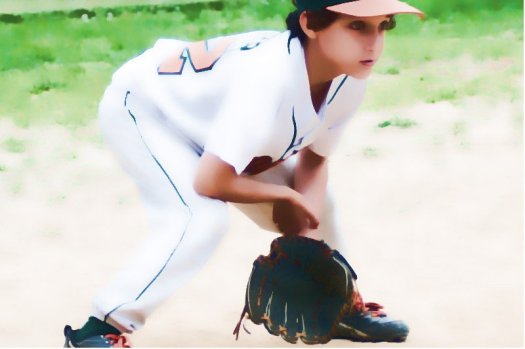
Youth baseball. That’s pretty much my life from April through November. As the mother of two travel baseball players, I spend most of my evenings and weekends sitting atop hard, uncomfortable aluminum bleachers, enthusiastically (and loudly) cheering on my kids.

Baseball dominates our conversations and our time during this season. But that’s okay. I enjoy watching my kids play. I enjoy sharing in their enthusiasm for the sport. I enjoy seeing them grow into new skills.

While sitting through one of their many recent games, it occurred to me that much can be gleaned about life from a simple ballgame. Little gems of wisdom can be found neatly tucked behind the mask of this popular childhood sport.

Read more at Mamalode.

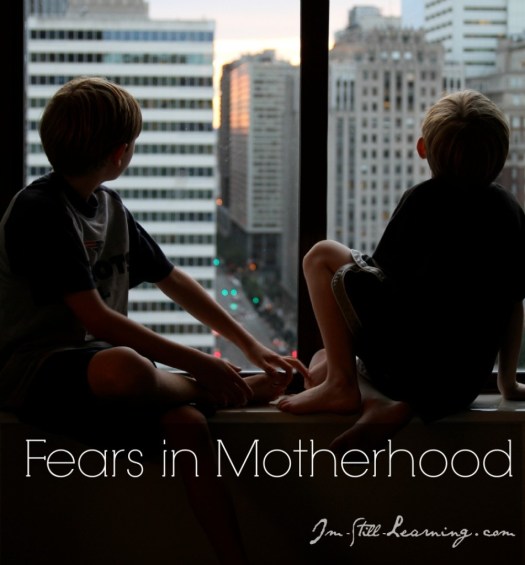
Fears in Motherhood

FearsInMotherhood3-951x1024.jpg

In a few short weeks, my first-born will enter the word of oversized hallways, dirty lockers and prepubescent troublemakers. That’s right, he’s off to middle school. And it scares me.

But why? What am I so afraid of? Do I believe he won’t be cared for there? Do I fear he’ll have trouble academically? Do I doubt his ability forge new relationships? Do I worry he’ll get lost in the crowd? No. That’s not it at all. In fact, I am confident he’ll be fit right in from day one.

What frightens me most is what this new journey represents: my baby growing up.

With each new age and stage in my children’s lives, a new crop of fears rears it’s ugly head—this stage being no exception. As I lie awake at night pondering this new chapter in my 10yo’s life, I wonder and I think—and I think and I wonder. And all sorts of crazy worries come crashing to mind in the dark of night:

Am I raising them the right way?
Have the lessons I’ve taught them all these years been the right ones?
Will they get sick?
Will they fall in with a bad crowd?
Will they be exposed to something they are unequipped to handle?
Will my bond with them will weaken as they age?
Will they get hurt. Physically. Emotionally?
Will they get rejected? By sports? By girls? By colleges? By jobs?
Will they recognize and use their amazing talents?
Will grow up, leave their mother and never look back?
Will I lose my purpose in life when the kids are too old to need me?

I’m scared. Since the day my children were born, I’ve been scared. Aren’t you? If only there was some way to gain complete control over our children. Life would be grand, wouldn’t it?

Not so much. That’s just not how life works. We simply cannot, nor should we try to, control all that surrounds us—including our children.

Then what can we do? How can we, as mothers, cope with the ever-expanding fears of raising our bambinos? What can we tell ourselves as we lie awake at night pondering life’s greatest fears?

I, for one, don’t want to succumb to the swirling downward drain that is the dark fears of my mind. So I have come up with some ideas as to how to quiet the chatter:

We can have faith in our influence as parents.
Though I sometimes lose sight of it, I know I am doing best that I can to raise kind, well-rounded, level-headed children. As mothers, aren’t we all? Haven’t we all made that our life’s mission since the day they were born? Why not have faith in the influence we’re having on them? Why not have faith that the foundation we are helping them to establish today will keep them grounded as they grow into their independence of tomorrow. I mean, isn’t it possible they’ve been hearing us all these years?

We can have faith in our children.
Let’s just stop and take a good, hard look at our children and the amazing human beings they are. Yes, they’re little. They’re flawed. They’re still developing. But they all have beautiful minds of their own. How wonderful that they are blessed with the ability to think and act for themselves. That is what we want, right? If we controlled their every action and decision, we’d be raising robots. How boring would that be? We cannot be there for them 100% of the time so let’s try to have faith that they’re putting their developing brains to good use when we’re not there to rescue them.

We can let our children make mistakes.
As parents, we know that our kids won’t always choose wisely. But let’s make peace with that. Sure we could step in whenever we see them about to make a mistake, but why rob our children of those brilliant opportunities to learn and grow? Many lessons that I’ve learned in my own life have come from mistakes that I’ve made. So let’s loosen the reins, step back and let our children experience all that goes along with being perfectly flawed human beings.

We can trust in the bond we’re forming with them.
As our kids age, they need us less and less. I already see my kids not wanting to spend as much time with me, which is a drastic 180 from a time when they wouldn’t even let me go to the bathroom alone. But just because they want to spend more time with their friends doesn’t mean they don’t cherish the relationship they have with me. It’s healthy and natural for kids to pull away from their mom and dad as they grow into their independence. Maybe we can trust that the relationship we continue to build with our children will stand the test of adolescence and the teen years. Maybe we can have faith that as they grow into adulthood, the mother-child bond will continue to hold a sacred place in their hearts.

We can do what we can to keep them healthy and safe, but realize that only so much is actually within our control.
If I let myself, I could spend hours worrying about all the terrible ailments and tragedies that might plague my children. It’s a dark place to go. Dark. So when I feel my mind starting to spin in that downward direction, I stop and forcibly remind myself to let go of that which is outside of my control. As moms, we want to ensure—dare I say guarantee—the health and safety of our children. But we can’t. Sure we can make them wear helmets, feed them healthy foods, get them their flu shots and reinforce the perils of smoking. But we can’t control every circumstance that might arise in their lives. I find this concept difficult to grasp, but I must always try. So, join me as I continue to remind myself to let go and let God.

We can see ourselves as a whole people, independent of our role as mom.
It’s easy to lose ourselves in motherhood. When I became a mom, nothing else mattered; it was clear that I was put on this earth to raise these two boys. Period. But what happens when these children to whom I’ve dedicated so many years of my life don’t need me? What will become of me then? As moms, I think many of us ask ourselves those questions—and answer lies within: we must remind ourselves that we were whole people before our children came along and we are still whole people today—even outside our role as mom. Yes, being mom is our number one priority and at times it feels like it defines who we are. But we also have jobs and interests and relationships that are unrelated to our kids. Perhaps those things are less pronounced in our lives when we’re in the throes of raising children, but they’re there nonetheless. We can have a life of meaning even when we’re not devoting every minute to motherhood. So rather than fearing the day when our children no longer need us, let’s remember that we don’t need them to need us in order to feel fulfilled.

Raising kids comes with such massive responsibility. It’s hard enough trying to keep it all together and stay afloat. Why do we need to make it harder on ourselves with all these extra fears and concerns? So many circumstances are out of our control, so why waste time playing the “what if” game? Perhaps a more productive approach would be to turn our focus away from all the unknowns of parenthood, let go of our fears and have a little faith that what we are doing is enough. That is my goal. Will it be yours?

To sign up for the free trial, go to teensafe http://trackingapps.org

I Am Not My Emotions

“Balance begins by knowing how you feel but not being so swayed that you are ruled by every passing incident of anger, worry or resentment.” –Deepak Chopra

Since childhood, I’ve struggled with frequent bouts of anxiety and panic. Hell, I wouldn’t be surprised if my predisposition to worry began in utero. (As a fetus, I probably worried incessantly about whether or not I was developing properly.) My anxiety has played such a dominant role in my life that, at times, it’s become all-consuming.

But I work at it—each and every day. Having spent the better part of my life navigating the rocky waters of my anxiety, I’ve learned a thing or two. And although I know that there are some parts of my emotional makeup that I may not be able to change, I can—and do—view it in a more productive light.

Read more at Today’s Mama.

How Can We Make Ourselves More Approachable to Our Kids?

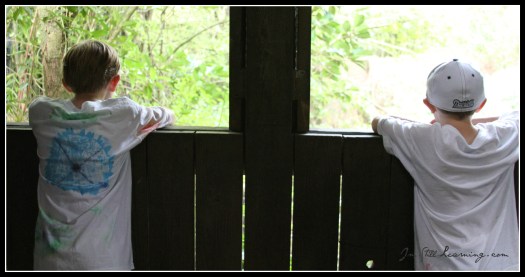
boyslooking

A few months ago, I became the mother of a ten-year old. And seeminlgly out of nowhere, my first-born has become more independent… more mature… more grown up.

Though I am having fun watching my boys grow and develop, I am also freighted by it. Terrified, actually. With each passing year, they become more self-sufficient; they have minds of their own and are making their own choices.

Much as I don’t enjoy this lack of control, I know that I simply cannot have eyes on my children 24/7. I can’t always be there to guide and protect them. I have no choice but to trust in the decisions they make when I’m not around.

What I can do is try to keep the lines of communication open; I can guide them from the sidelines. But any parent will tell you that’s not as easy as it sounds.

So how can we get our growing kids to talk to us… to open up… to admit their mistakes… to ask the difficult questions? Here’s how I do it:

I don’t attack.
Last week, my ten-year old and a few of his friends got their hands on a Sharpie while playing in the back yard. Somehow they thought it would be a good idea to write on swing set, my new retaining wall and the deck. Anger doesn’t begin to capture the emotion I was feeling when I discovered my graffitied landscaping. I wanted to scream. I wanted to yell. I wanted to say, “what’s wrong with you!?!” But I knew if I did, I’d not only make him feel terrible about himself, but I’d also make it harder for him talk to me about it. So instead, I took a deep breath and I calmly asked, “What on earth was going through your head?” With that, I got sincerely-apologetic, “I don’t know. I wasn’t thinking. I’m so sorry, mom.” Clearly, he acted on impulse, as ten-year old boys often do. We discussed it. He apologized. He cried. He promised to never do it again. He hugged me and I hugged him back. I told him I loved him. I then handed him a Magic Eraser and he got to work cleaning up his mess. He then suffered the consequence of no XBox for the rest of the weekend.

I admit to my mistakes.
It’s all too easy for our kids to look at us parents and assume we’re always doing the right thing. I mean, adults can do no wrong, right? Wrong! I think this perception of us makes it harder for them to come to us with admissions of guilt. So I talk openly to my kids about my own mistakes. A few weeks ago, in a fit of rage, I went on a rant to my husband about the idiots at the Pharmacy who didn’t seem to have a clue as to what they were doing. Unbeknownst to me, my children heard the whole conversation. Now, I don’t like the word “idiot.” I don’t usually use it and I come down hard on them when they do. And here I was, going off on the “idiots” who were just trying (albeit, poorly) to do their job. (I may have even dropped an F bomb in there, too.) When I realized they’d heard how I was talking, I apologized to them. I explained that I was wrong, that I made a mistake and that I was not proud of my behavior. I reminded them that I, like everybody, make mistakes and it’s okay. I told them that I would try harder next time.

I remind them that I was once a kid, too.
Earlier this year, my 8yo was sent to the Principal’s office for shooting a spitball lunch. Sure I grounded him and sent him to his room and all that good stuff. But the fun didn’t end there; I wanted to talk about it and understand what was going through his head at the time. So I asked him to tell me what happened. He just sat there, silent, sad and a little scared.  Seeing this was going nowhere fast, I then explained to him that while I was disappointed with his poor behavior, I was once a kid, too; I, like him, used to get in trouble for my own poor choices. With that, he relaxed a little and he started to talk. He was able to see me not as the do-no-wrong mom, but rather as someone who possibly remembers what it’s like to be a kid. This—the fact that I was once where my children are now—is something I frequently reinforce with them. I never want my boys to see me as the holier-than-thou parental figure who will look down on them for mistakes they make—but rather as someone who’s been there, too and gets it.

I place a very strong emphasis on telling the truth.
I have no tolerance for lying. I frequently tell my kids that the lie is usually worse than the crime. Take my ten-year-old, for example: He recently got in trouble for repeatedly disobeying the teacher’s orders during a tour of the middle school. Though the teacher told me all about it, I wanted to hear it from his own lips. Later that day, I calmly asked him how the middle school tour went. He hemmed and hawed a bit, then finally fessed up. While I was clearly not happy about what had happened, I thanked him for telling me the truth and we talked briefly about the importance of honesty. I then turned my attention to his inappropriate behavior at school. By starting out on more of a positive note, the rest of the conversation flowed smoothly from there.

Does it work every single time? No. Am I always cool, calm and collected? Not so much. But generally speaking, this approach works for me. For now, the lines of communication are free flowing. I can only hope and pray that I’ll have the same level of success as they get older.

Triggers

pexels-photo-459451

One night recently, I was lying on the couch watching one of my favorite TV shows, when suddenly my heart started to race—for seemingly no specific reason.

As someone who struggles with anxiety, I know that feelings of general emotional discomfort can come on suddenly without any overt cause. Sure, there’s always a reason for it, but it’s not always obvious. I mean, I have a ton of thoughts every minute—some at the forefront of my mind and some hiding away in the back.

Hand on my pounding heart, I wondered what was causing these feelings of anxiety. So I started to question it: Why am I anxious? What was I thinking about when it came on? What am I thinking about now? Is it lingering thoughts of that awful story I heard on the news? Am I feeling anxious about the health and wellbeing of my kids? Am I overtired? 

After running through all the possible conscious and subconscious thoughts that may have triggered my panic, I couldn’t quite put my finger on its source. So I decided, instead, to focus on riding the wave until it was over.

As I slowly climbed the stairs to bed, I began breathing deeply while attempting to reverse my negative thought patterns and slow the pounding of my heart. I looked in on my boys who were soundly sleeping in the comfort of their own beds, gave them each a kiss on their foreheads and thanked God for their safety in that moment. Then, still breathing, I brushed my teeth, washed my face and crawled into bed.

When I was still and all was quiet, I heard a sound that instantly enveloped me with a feeling of relaxation: the gentle pattering of rain on the roof. Just as quickly as my anxiety had come on by a trigger of unknown origins, it retreated with the soothing tapping of the rain above me. Within minutes, I was asleep.

That’s the thing about emotions—they can be triggered by pretty much anything: a song, a word, a thought, a sight or even something hiding beneath the surface of the conscious mind. For me, it’s easy to focus on the negative triggers in my life and overlook the positive ones. But the positive triggers—those things that make me feel really good: the smell of a crackling fire, climbing into a freshly made bed, a sweet kiss from my boys, listening to the rain from the comfort of my own bed—also hold tremendous power. And that is where I’d like to start directing my thoughts.

How Do You Define Pain?

Last Friday, my mom fell and broke her leg. A trip to the ER and an X-ray told her she’d need surgery to repair—surgery which, for reasons unbeknownst to me, could not take place until the following Tuesday. Oh the anticipation.

I’m happy to report that my mom made it through the “procedure” just fine. After an hour-long surgery and a sleepless night in the hospital, she is now home resting—and healing—in her own bed. The first thing I asked her when she arrived home was, “Aren’t you so relieved the surgery is over? Don’t you feel so much better today than you did two days ago when you were still waiting for the surgery to happen?” Her response: “Yes, I’m relieved, but I’m in PAIN.

I’d been so focused on her getting through the anxiety and worry (and anesthesia) of the surgery that I’d given little thought to how much physical pain she’d be in.

This got me to thinking about life’s various forms of pain. In my mind, there are two types: physical and emotional.

I suffer from anxiety—always have and probably always will. I am no stranger to panic attacks. I’ve even dabbled in depression from time to time. Emotional pain—worry, panic, anguish, sorrow—has kicked me to the ground more times than I care to count. Though I work hard every day to maintain a positive attitude and keep the unproductive thoughts at bay, it’s not always easy. Many of my goals in life revolve around my quest for emotional health. With a continued focus on productive thought patterns, I hope to get better and better each day at managing my emotions—at keeping my emotional pain levels under control.

That said, I am no stranger to physical pain either. I also suffer from an unstable patella—two in fact. This pretty much means that if the wind blows the wrong way, my knees dislocate. Pain is pain. Whether emotional or physical, neither brand of pain is enjoyable.

I know life is full of ups and downs. I know I will have another panic attack in my life, just as I know my knees will again dislocate. Both have the power to crush me. But for me, the key to managing the pain is to focus on the light at the end of the tunnel, have faith in a better tomorrow and come through the experience somehow stronger.

I realize this goal may a lofty one. I realize that healing from pain—any pain—is one of life’s biggest challenges. But goals aren’t supposed to be easy, are they?

I don’t envy my mom’s position right now—being laid up in bed with throbbing pain and a mammoth cast on her leg. But my hope for her is that she will set her sights on the day when her leg is fully healed and she can walk on two feet again. My hope for her is that she will find some silver lining through this difficult experience and come out the other end better for it in some way.

Pain is a natural part of our lives. Nobody enjoys it and most of us try to avoid it, but it touches us all, nonetheless. It’s what we do with the pain that’s important.