Why I Told My Kids I’m in Therapy

pexels-photo-279470

I’m in therapy. I’m approaching 43 and I’ve been in therapy for the better part of my adult life. In my younger years, I was ashamed of it — embarrassed to admit to friends and family that I needed help when it came to managing my emotions. I believed that this was an “abnormal” part of me, something that made me weak.

Then I realized I had it all wrong.

Now that I’m older and wiser, I have a very different perspective on the matter. Today, I see it as a sign of bravery and strength.

Yes, I am in therapy — and not only am I NOT ashamed to admit it to my kids, but I’m actually proud of it. By letting my children see this part of me, I know that I’m setting a positive example for them.

Read more at Care.com.

I Am Not My Emotions

“Balance begins by knowing how you feel but not being so swayed that you are ruled by every passing incident of anger, worry or resentment.” –Deepak Chopra

Since childhood, I’ve struggled with frequent bouts of anxiety and panic. Hell, I wouldn’t be surprised if my predisposition to worry began in utero. (As a fetus, I probably worried incessantly about whether or not I was developing properly.) My anxiety has played such a dominant role in my life that, at times, it’s become all-consuming.

But I work at it—each and every day. Having spent the better part of my life navigating the rocky waters of my anxiety, I’ve learned a thing or two. And although I know that there are some parts of my emotional makeup that I may not be able to change, I can—and do—view it in a more productive light.

Read more at Today’s Mama.

Triggers

pexels-photo-459451

One night recently, I was lying on the couch watching one of my favorite TV shows, when suddenly my heart started to race—for seemingly no specific reason.

As someone who struggles with anxiety, I know that feelings of general emotional discomfort can come on suddenly without any overt cause. Sure, there’s always a reason for it, but it’s not always obvious. I mean, I have a ton of thoughts every minute—some at the forefront of my mind and some hiding away in the back.

Hand on my pounding heart, I wondered what was causing these feelings of anxiety. So I started to question it: Why am I anxious? What was I thinking about when it came on? What am I thinking about now? Is it lingering thoughts of that awful story I heard on the news? Am I feeling anxious about the health and wellbeing of my kids? Am I overtired? 

After running through all the possible conscious and subconscious thoughts that may have triggered my panic, I couldn’t quite put my finger on its source. So I decided, instead, to focus on riding the wave until it was over.

As I slowly climbed the stairs to bed, I began breathing deeply while attempting to reverse my negative thought patterns and slow the pounding of my heart. I looked in on my boys who were soundly sleeping in the comfort of their own beds, gave them each a kiss on their foreheads and thanked God for their safety in that moment. Then, still breathing, I brushed my teeth, washed my face and crawled into bed.

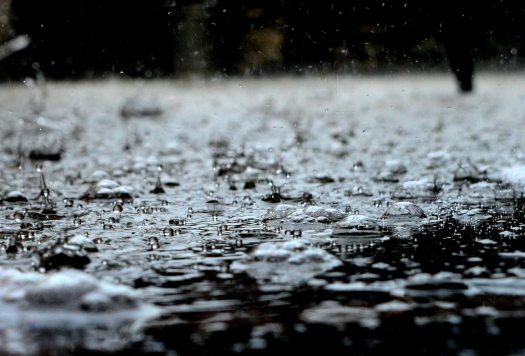
When I was still and all was quiet, I heard a sound that instantly enveloped me with a feeling of relaxation: the gentle pattering of rain on the roof. Just as quickly as my anxiety had come on by a trigger of unknown origins, it retreated with the soothing tapping of the rain above me. Within minutes, I was asleep.

That’s the thing about emotions—they can be triggered by pretty much anything: a song, a word, a thought, a sight or even something hiding beneath the surface of the conscious mind. For me, it’s easy to focus on the negative triggers in my life and overlook the positive ones. But the positive triggers—those things that make me feel really good: the smell of a crackling fire, climbing into a freshly made bed, a sweet kiss from my boys, listening to the rain from the comfort of my own bed—also hold tremendous power. And that is where I’d like to start directing my thoughts.

How Do You Define Pain?

Last Friday, my mom fell and broke her leg. A trip to the ER and an X-ray told her she’d need surgery to repair—surgery which, for reasons unbeknownst to me, could not take place until the following Tuesday. Oh the anticipation.

I’m happy to report that my mom made it through the “procedure” just fine. After an hour-long surgery and a sleepless night in the hospital, she is now home resting—and healing—in her own bed. The first thing I asked her when she arrived home was, “Aren’t you so relieved the surgery is over? Don’t you feel so much better today than you did two days ago when you were still waiting for the surgery to happen?” Her response: “Yes, I’m relieved, but I’m in PAIN.

I’d been so focused on her getting through the anxiety and worry (and anesthesia) of the surgery that I’d given little thought to how much physical pain she’d be in.

This got me to thinking about life’s various forms of pain. In my mind, there are two types: physical and emotional.

I suffer from anxiety—always have and probably always will. I am no stranger to panic attacks. I’ve even dabbled in depression from time to time. Emotional pain—worry, panic, anguish, sorrow—has kicked me to the ground more times than I care to count. Though I work hard every day to maintain a positive attitude and keep the unproductive thoughts at bay, it’s not always easy. Many of my goals in life revolve around my quest for emotional health. With a continued focus on productive thought patterns, I hope to get better and better each day at managing my emotions—at keeping my emotional pain levels under control.

That said, I am no stranger to physical pain either. I also suffer from an unstable patella—two in fact. This pretty much means that if the wind blows the wrong way, my knees dislocate. Pain is pain. Whether emotional or physical, neither brand of pain is enjoyable.

I know life is full of ups and downs. I know I will have another panic attack in my life, just as I know my knees will again dislocate. Both have the power to crush me. But for me, the key to managing the pain is to focus on the light at the end of the tunnel, have faith in a better tomorrow and come through the experience somehow stronger.

I realize this goal may a lofty one. I realize that healing from pain—any pain—is one of life’s biggest challenges. But goals aren’t supposed to be easy, are they?

I don’t envy my mom’s position right now—being laid up in bed with throbbing pain and a mammoth cast on her leg. But my hope for her is that she will set her sights on the day when her leg is fully healed and she can walk on two feet again. My hope for her is that she will find some silver lining through this difficult experience and come out the other end better for it in some way.

Pain is a natural part of our lives. Nobody enjoys it and most of us try to avoid it, but it touches us all, nonetheless. It’s what we do with the pain that’s important.